A job you can start without a diploma, present in every town, and one that leads quickly to employment: retail remains the royal road to landing a work-study placement in 2026. Whether you're aiming for the shop floor, large-scale distribution or business-to-business sales, the doors are wide open.
In short: retail and distribution account for 264,000 recruitment projects in 2026 according to France Travail's Workforce Needs (BMO) survey, with a difficulty rate of around 37%, below the national average (43.8%). Self-service employees, cashiers and sales assistants are among the roles with the most hiring plans. The result: an apprenticeship contract is easier to sign here than elsewhere, from CAP to BTS.
To see current offers and training courses, visit our page of work-study offers in sales and retail.
Why choose retail and sales as work-study?
It's one of the very top recruiting sectors in France. Driven by local retail, e-commerce and large-scale distribution, it offers opportunities to very varied profiles — including without experience or a prior diploma.
Concretely, the flagship roles in demand in 2026 are:
- sales assistants in shops and specialist boutiques;
- self-service employees (shelf-stacking, labelling, stock management): around 59,900 recruitment projects on their own;
- cashiers and checkout staff;
- department heads and store managers.
In a sector where only just over one hire in three is considered difficult, a motivated candidate trained through work-study often signs faster than elsewhere.
For the apprentice, the advantage is twofold: a job that recruits everywhere, and training that's funded while you earn. Browse the work-study careers to spot the one that suits you.
Which work-study qualifications, from CAP to BTS?
The sector offers a complete pathway, fully accessible through apprenticeship in a CFA. Each level has its diploma:
| Level | Diploma | Typical role |
|---|---|---|
| CAP | Équipier polyvalent du commerce (retail all-rounder) | Sales employee, checkout assistant |
| Bac pro (3 years) | Métiers du commerce et de la vente | Sales advisor, retail advisor |
| BTS (2 years) | Management commercial opérationnel (MCO) | Department head, store manager |
| BTS (2 years) | Négociation et digitalisation de la relation client (NDRC) | Sales rep, account manager, business developer |
| Bachelor / Master | Retail, marketing, business development | Sector manager, sales manager |
The CAP Équipier polyvalent du commerce is accessible straight after Year 10 (the French 3e), with no prior diploma: it's the ideal entry point, including for career changers. At Bac+2 level, two BTS structure the sector. The BTS MCO targets running a point of sale and managing a team; the BTS NDRC trains you in sales negotiation and digital customer relations.
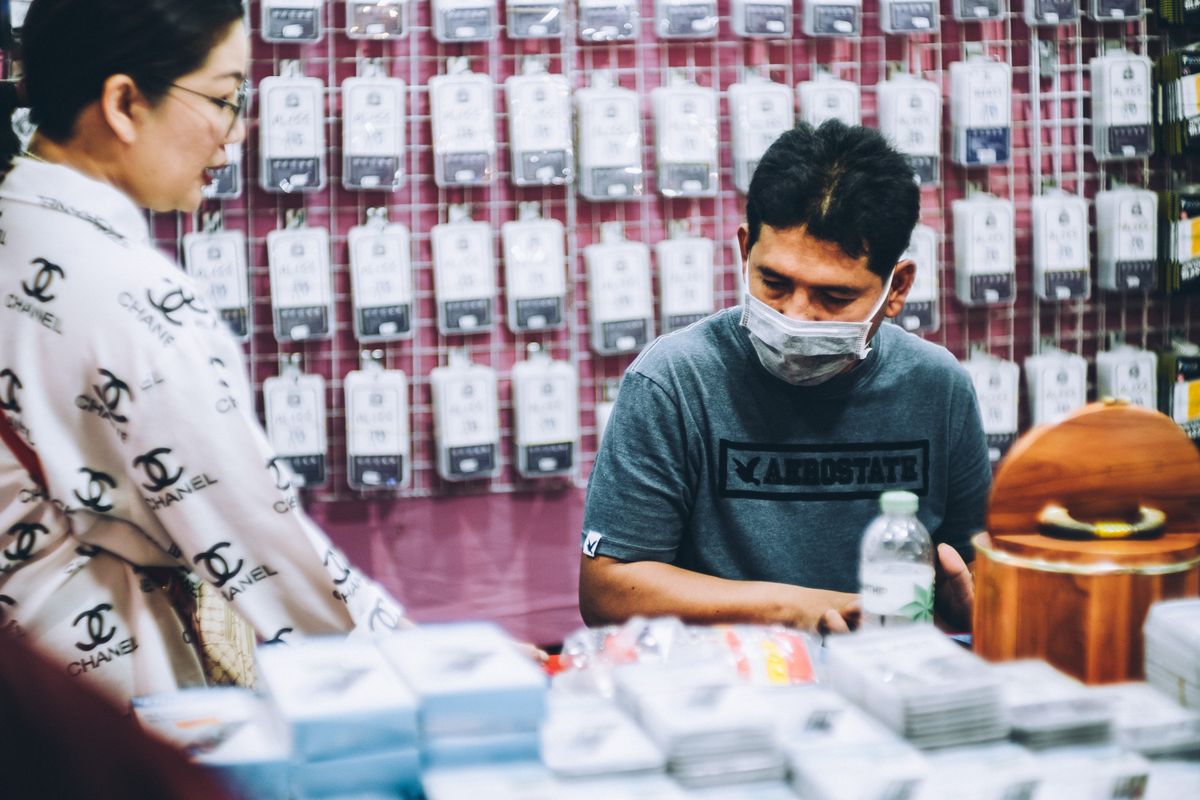
The rhythm alternates periods in the company and periods at the CFA, on a schedule specific to each course (for example one week at the CFA for two or three in the company at CAP level, or two days of classes a week at BTS level). You learn the trade where it really counts: on the sales floor, in contact with customers.
What outcomes and employment after the diploma?
Retail offers quick job prospects: an apprentice who is already operational in store is attractive to the host company and to competing chains alike. InserJeunes data, published by the French ministries of Education and Labour, also show that apprentices are more often in work six months after leaving their course than school-based students at the same level.
Progression is fast too: a sales assistant can move up to department head, then store manager or sector manager within a few years. The sector values field experience as much as the diploma.
How much does an apprentice earn, and what support is available?
An apprentice's pay follows the legal apprenticeship scale: a percentage of the SMIC that rises with age and year of contract. In retail, many roles add performance bonuses or sales commission on top of the base salary. To find your exact net pay for your situation, use the salary simulator.
On top of that, as with any work-study, come several financial aids: housing, mobility, driving-licence support from local authorities (see our article on driving-licence aid for apprentices) and the trades student card. Enough to ease the budget of a young person starting out.
How to land your work-study for the 2026 intake?
The sector recruits all year, but summer and the start of term are strategic windows: retailers are preparing their September contracts and anticipating the end-of-year activity peaks. A few reflexes to seal the deal:
- Apply early and widely. Check the work-study offers every week and apply without waiting for term to start.
- Bet on speculative applications. Push open the doors of the retailers in your town: many recruit continuously, including outside of adverts.
- Showcase your soft skills. People skills, a smile, availability and team spirit count as much as the diploma in sales.
- Stay responsive. You can sign up to three months after your training begins, but the best spots go fast.
The context is on your side: as our analysis of the 2026 work-study market shows, sectors under pressure offer the best chances of signing. Retail is one of them — it's up to you to seize the opportunity for the new term.