An ageing population, constant strain on hospitals and care homes, and a growing need for home care: rarely has the healthcare sector been so eager to recruit. And work-study has become one of the most direct ways to break into it in 2026.
In short: healthcare is one of the few sectors growing this year, with 322,000 planned hires in 2026 according to France Travail's Labour Needs (BMO) survey, slightly up on last year. Home carers and personal-care assistants are surging (69,500 projects, +13.3%), followed by nursing assistants (62,100 projects). With 54% of hires deemed hard to fill, a candidate trained through work-study has a clear head start, from the CAP to the nursing degree.
To see current offers and training courses, visit our page of work-study offers in healthcare and social care.
Why choose healthcare in work-study?
The care sector is driven by structural needs: an ageing population, rising demand for care services, and mass retirements. As a result, the demand for staff does not let up, year after year.
In practice, the most sought-after jobs in 2026 are:
- home carers and personal-care assistants: around 69,500 planned hires, growing fast (+13.3% over one year);
- nursing assistants: around 62,100 projects;
- nurses, where around 60% of hires are deemed difficult by employers.
In a sector where more than one hire in two is difficult, a motivated candidate trained through work-study is welcomed with open arms.
Another major asset for getting started: employers are open to varied profiles. Nationally, in 2025, 74% of recruiters facing difficulties accepted less experienced candidates and 63% hired people from a different training background than planned, according to France Travail. Healthcare is therefore one of the most accessible routes, including for a career change. Browse the work-study careers to spot the one that suits you.
What work-study training, from CAP to nurse?
Paramedical careers offer a complete path, largely accessible through apprenticeship. Each level has its diploma:
| Level | Diploma | Typical role |
|---|---|---|
| CAP | Early Childhood Educational Support (AEPE) | Nursery assistant, childminder |
| State diploma (no level required) | Nursing assistant (DEAS) · Educational and social support worker (DEAES) | Nursing assistant, home carer |
| State diploma or certified title | Childcare auxiliary · Ambulance driver · Dental assistant (certified title) | Nursery, maternity, medical transport, practice |
| Vocational baccalaureate (3 years) | Personal care, support and services (ASSP) | Home carer, care-facility worker |
| Higher technician (2 years) | Health and social sector services (SP3S) · Dietetics | Coordination, health and social structures |
| Bac+3 and above | State Nursing Diploma (DEI) | Nurse |
The DEAS (nursing assistant) is emblematic: it is prepared through work-study in an IFAS institute (1,540 hours of training, about a year on the standard track and often up to 18 months as an apprenticeship), from age 17, with no prior qualification. Selection is based on an application and oral interview, with no written exam, and the training is free and paid. The nursing degree is now available as an apprenticeship in many IFSI institutes, often from the 2nd or 3rd year.
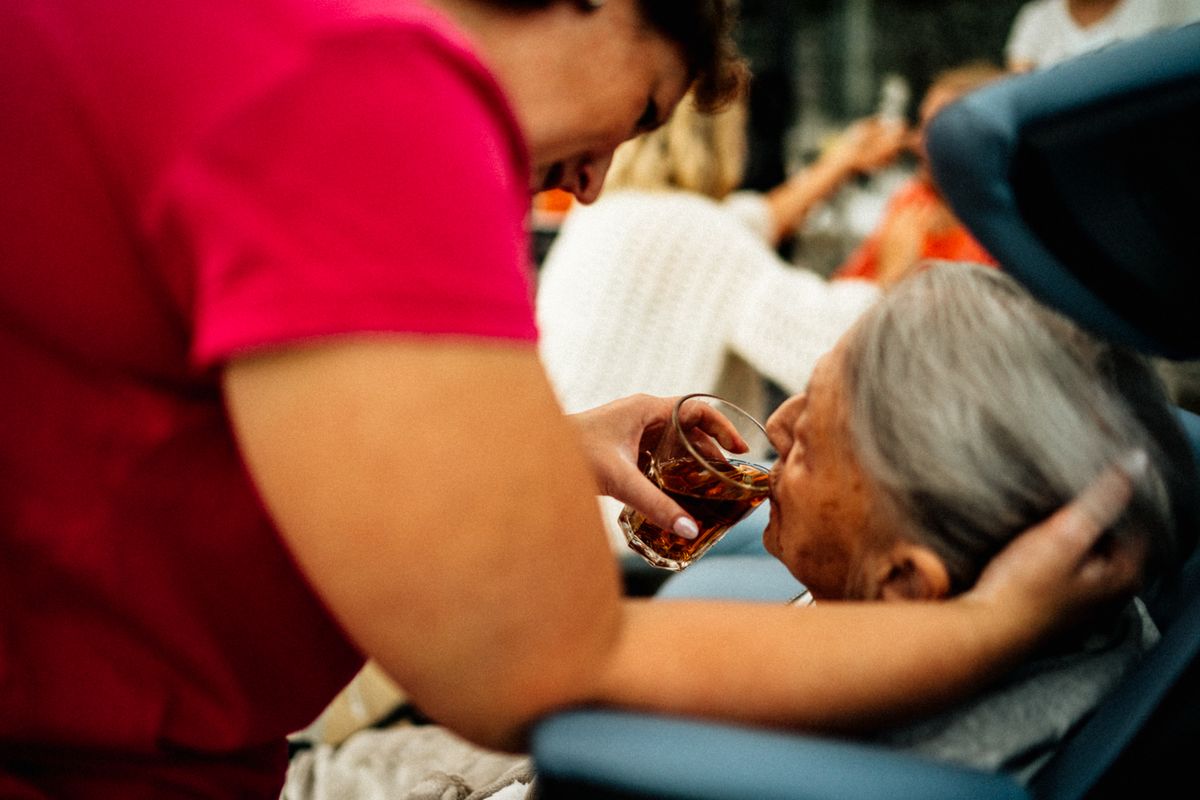
The rhythm alternates periods in a facility (hospital, care home, clinic, home care service) and periods at the training centre. You learn the professional gesture where it matters: at the patient's bedside.
How much does an apprentice earn, and what support?
Pay for a healthcare apprentice follows the legal apprenticeship scale: a percentage of the SMIC that rises with age and contract year. To find your exact net salary for your situation, use the pay calculator.
On top of that, as in any work-study programme, come several financial supports: housing, mobility, driving-licence support from local authorities (see our article on driving-licence aid for apprentices) or the trades student card. Enough to ease the budget of a young person — or an adult retraining — who is just starting out.
How to land your work-study contract in care?
The sector recruits all year round, but the September start concentrates entries into training. A few reflexes to seal the deal:
- Target employers who train. Hospitals, care homes, clinics and home-care services fund contracts directly through their OPCO. Check the work-study offers every week.
- Play up your soft skills. Empathy, composure, a sense of contact: these qualities count as much as the diploma, and recruiters know it.
- Value a career change. Life experience or a previous people-facing job are real assets in care.
- Stay responsive. You can sign up to three months after your training starts, but the best spots go fast.
The context is on your side: as our analysis of the 2026 work-study market confirms, high-demand sectors like healthcare offer the best chances of signing. A job that means something, that hires and that trains: the opportunity is there for the taking this summer.