The CAP 2026 results are arriving, and with them one big question: enter the workforce or carry on studying? The good news is that, whatever you decide, work-study offers a paid path that employers value.
In short: the CAP 2026 results are published in early July 2026, on a date set by each académie (sometimes depending on the specialism). You check them online on the official results portal, then your transcript appears on Cyclades. After the CAP, you can continue in work-study towards a bac professionnel, a certificat de spécialisation (formerly mention complémentaire) or a brevet professionnel, all while being paid.
When are the CAP 2026 results published?
The written general-knowledge exams were held on 8 and 9 June 2026. The results are then published in early July 2026, on a date set by each académie and sometimes different depending on the specialism, since each board deliberates at its own pace.
| Stage | 2026 period |
|---|---|
| Written general-knowledge exams | 8 and 9 June 2026 |
| Publication of results | Early July 2026 (date set by each académie) |
| Transcript on Cyclades | After the results are published |
| Replacement written exams | 14 and 15 September 2026 |
"The CAP's written general-education exams will take place, for the normal session, on Monday 8 and Tuesday 9 June." — Service-Public.fr, 2026 exam dates
You check your result online on your académie's official results portal. The official transcript is downloaded from your Cyclades candidate account: it is this document, not the online display, that counts for your enrolments.
What can you do after a CAP in 2026?
The CAP trains professionals who are immediately operational: most graduates choose to enter the workforce. But continuing your studies is entirely possible, and often pays off in the medium term. In work-study, every pathway combines a qualification, a salary and experience.
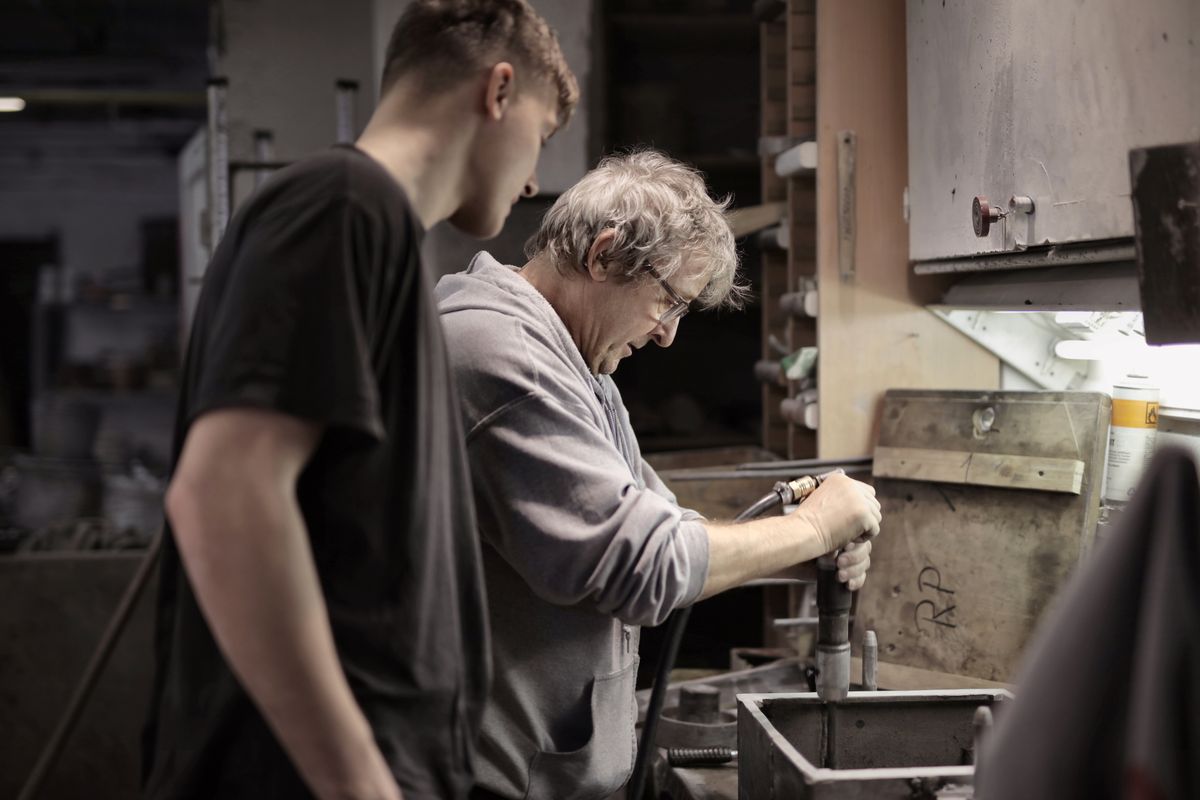
The main pathways after a CAP, available through apprenticeship:
- Bac professionnel (2 years): in the same specialism or a related field, to aim for more qualified roles and keep the door open to higher education.
- Certificat de spécialisation (CS, ex-mention complémentaire) (1 year): to specialise or gain a quickly marketable double skill.
- Brevet professionnel (BP) (2 years): to deepen your trade and, in the crafts, set up your own business.
- Other routes: diplôme des métiers d'art (DMA), brevet technique des métiers (BTM) or brevet de maîtrise (BM) depending on the sector.
Why continue in work-study after a CAP?
The key advantage: most of these programmes are available by applying directly to a CFA, without going through Parcoursup. That gives you flexibility even when your results come out in early July.
Work-study also pays off when it comes to employment. According to the DEPP, among CAP-level apprentices who left education in 2023, 70% were in salaried employment two years later (59% after six months), compared with 31% for vocational school pupils at the same level: experience gained in a company makes the difference. To compare the amounts, the pay calculator estimates your future salary based on your age and level.
Be aware, however, that in apprenticeship, admission to a CFA is not enough. The qualification is validated with a contract signed with an employer. So the search starts now. Our method to find a company for your work-study sets out each step, and you can browse the available work-study offers right away.
How to turn July into a springboard?
Whether or not you pass your CAP, here is how to bounce back without wasting time:
- Download your transcript on Cyclades as soon as it goes online: it will be required for any enrolment or application.
- Target continuing in work-study (bac pro, CS, BP): a funded and paid qualification is a strong argument with recruiters.
- Launch your company applications without waiting: most contracts are signed between May and September, and places fill up fast.
- Explore the opportunities among the jobs that recruit in work-study and the work-study programmes near you.
If you fail, don't panic: as with the BTS 2026, the carry-over of marks protects your achievements and work-study remains accessible. To make the right choice of programme, revisit our pointers to choose your work-study well. Work-study remains one of the surest routes to employment: free training, a salary every month and experience that counts.